Soundbar vs Home Theatre: Complete Guide for Indian Homes
Choosing between a soundbar and a home theatre is not simply a question of which one sounds better. Your room size, seating, wiring, interior design, movie and gaming habits, Dolby Atmos requirements and future upgrade plans all influence which approach makes sense.
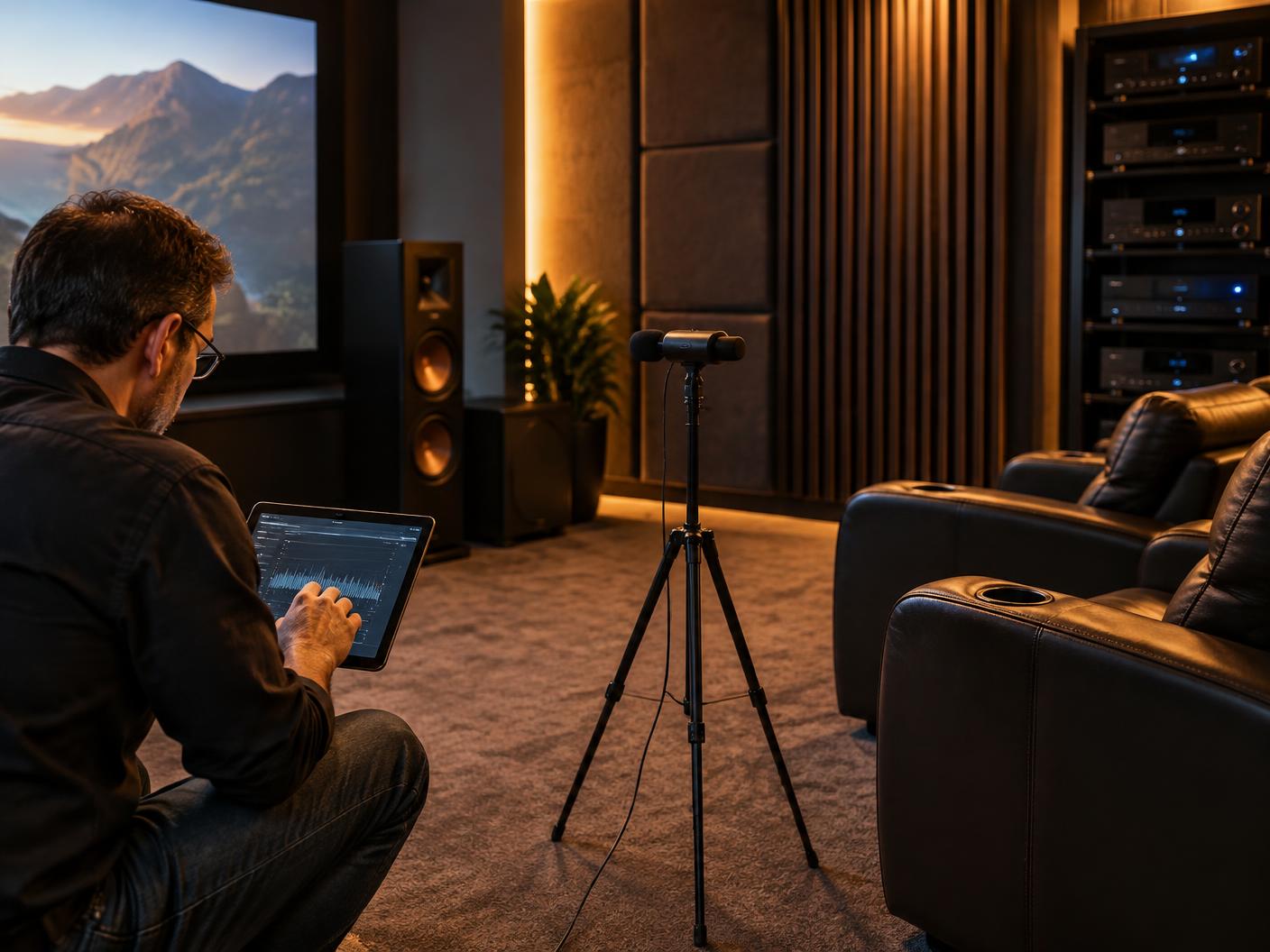
Start with the room and the seats — then decide whether one bar or separate speakers suits the space.
From one bar to a full cinema layout
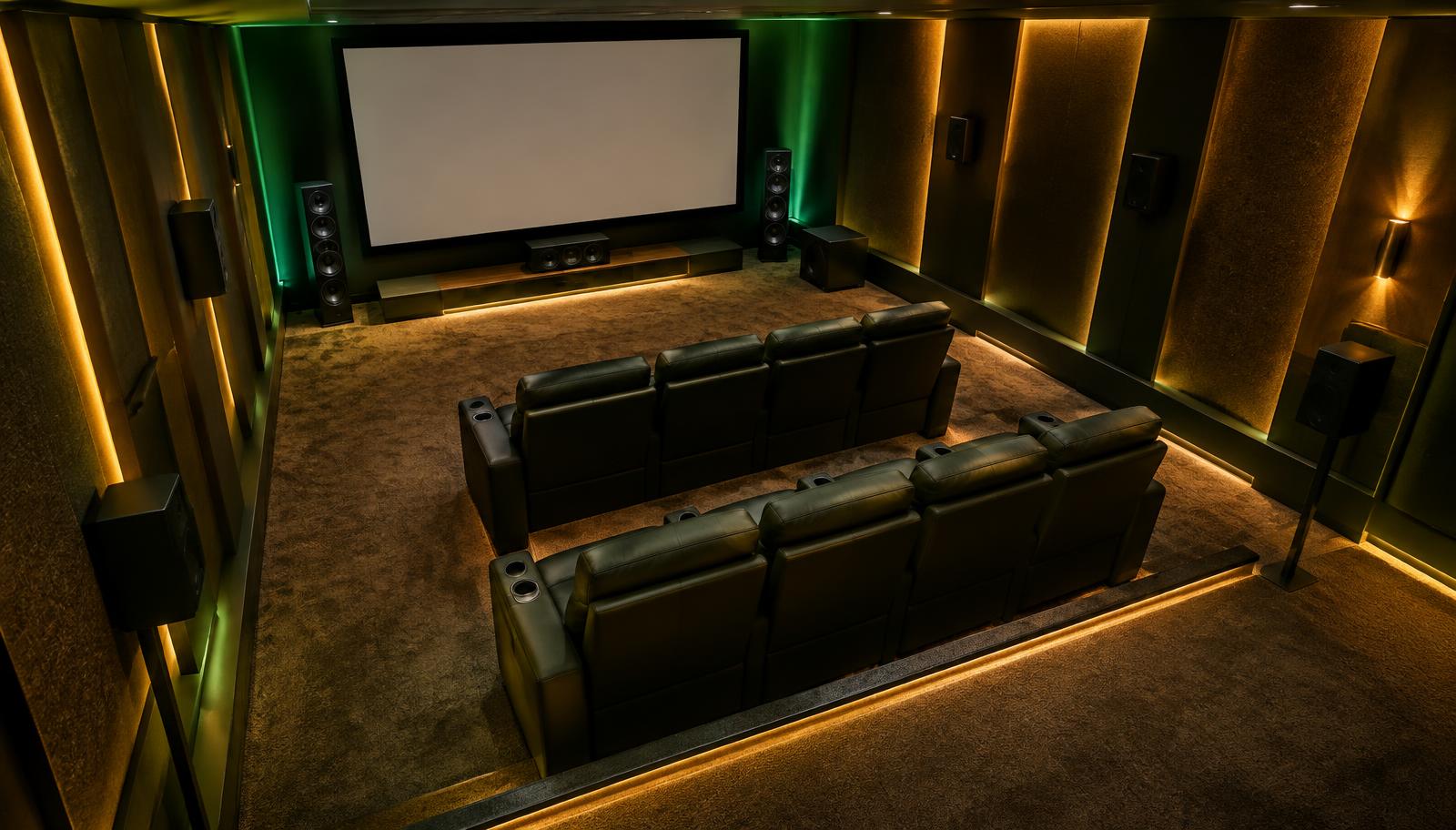
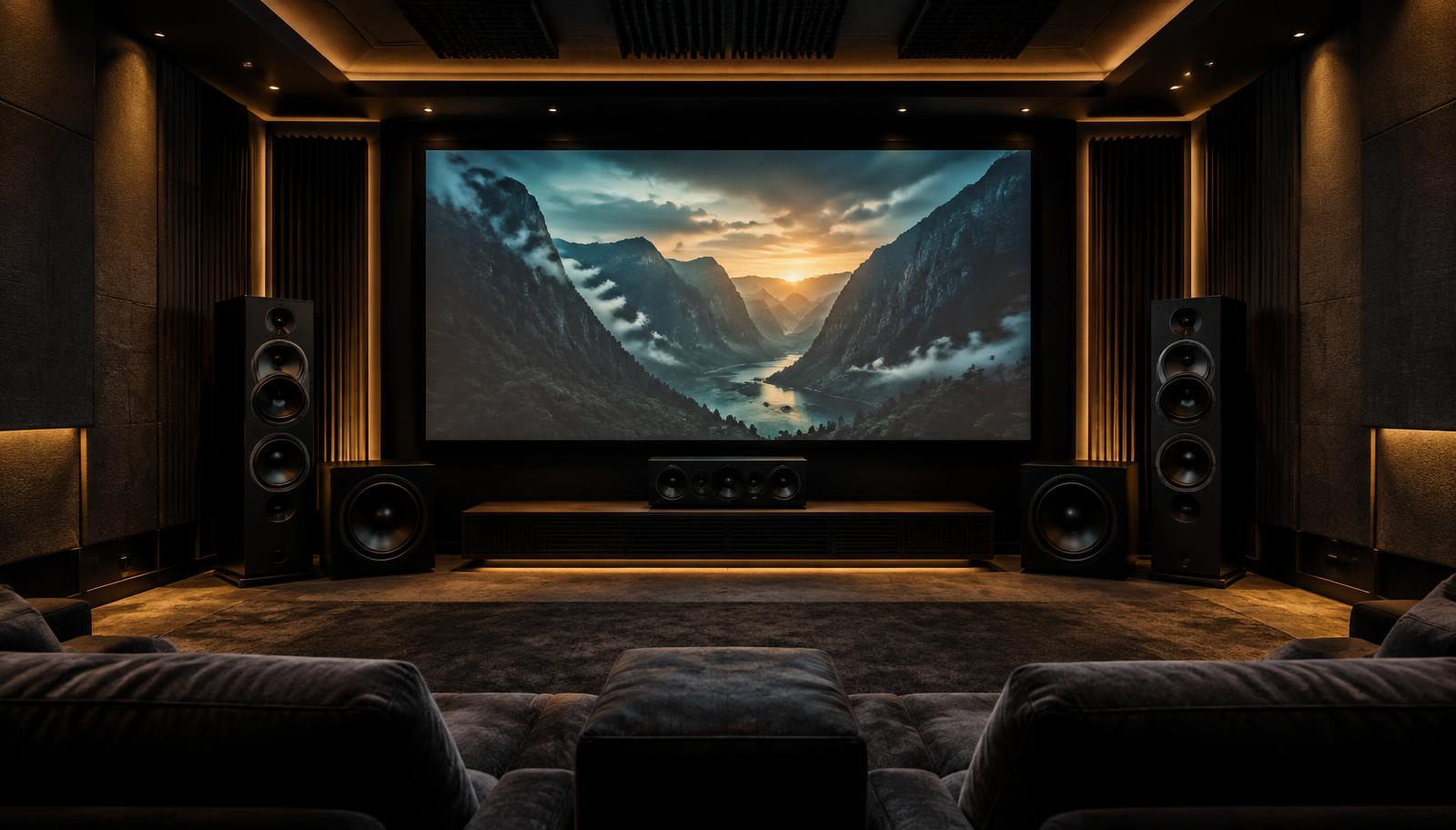
Component home theatre: separate speakers placed for the roomDedicated Dolby Atmos height speakers need ceiling planningCalibration matters for every system type
Soundbar or Home Theatre? The Quick Answer
A soundbar can be a strong fit when simplicity, compact design, minimal wiring and easy TV integration are priorities. A component home theatre can be a strong fit when physical surround speakers, dedicated Dolby Atmos channels, room-based speaker placement, deeper customisation and future upgrade flexibility are priorities. A soundbar with a subwoofer and rear speakers occupies an important middle ground. Neither category is universally better — the right choice depends on your room, seating, wiring, interiors and how you watch and listen.
5-question decision tool
Which Audio Setup Fits My Room?
Answer a few questions for a directional suggestion. No score, no price and no brand — a room assessment confirms the final design.
Which Direction Suits Which Priority?
Use this as a starting point, not a verdict. Each row describes where a direction is often more suitable — the exact products, the room and the installation still decide the outcome.
Soundbar vs home theatre — priority-based starting points
Priority
More suitable direction
Simple installation
Soundbar
Minimal visible equipment
Soundbar
Apartment-friendly
Soundbar / compact surround
Physical surround speakers
Home theatre (or soundbar with true rear speakers)
Dedicated cinema room
Home theatre
Maximum upgrade flexibility
Home theatre
Dolby Atmos with dedicated height speakers
Home theatre
TV + OTT viewing
Either
Gaming
Either, depending on requirements
Music
Depends on system design
Future expansion
Component home theatre generally offers more flexibility
Which Soundbar and Which Home Theatre? Compare Architectures, Not Categories
This is the most important idea in the whole comparison. A basic two-channel soundbar is not equivalent to a premium soundbar with a wireless subwoofer and true rear speakers. A basic home-theatre-in-a-box is not equivalent to a professionally designed AV receiver-based cinema system with calibrated speakers. Many online comparisons put the cheapest version of one category against the best version of the other. Compare the actual system architectures you are considering — how many physical speakers, where they sit relative to your seats, how bass is handled, and how the system is set up for your room.
Home-theatre-in-a-box ≠ AV receiver-based component theatre
Channel count alone does not determine quality — placement, room and calibration do too
The Decision Sequence: Start With the Room, Not the Product
Room → seating → display → audio requirements → surround requirements → wiring → acoustics → interior → future upgrades → system type. The system type is the last decision, not the first. A soundbar chosen before you know where people sit, or a 7.1.4 layout chosen before checking the ceiling and wiring routes, often ends in compromise.
What Is a Soundbar?
A soundbar is a compact speaker system, usually placed below or mounted under the TV, with multiple drivers in one enclosure. Depending on the model, it may include dialogue enhancement, HDMI ARC or eARC for a single-cable connection to the TV, Bluetooth or Wi-Fi streaming, an optional or included subwoofer, optional rear speakers, Dolby Atmos decoding with up-firing or virtual height processing, and smart or voice features. Not every soundbar has all of these — features, expandability and performance vary considerably by manufacturer and model.
What Is a Home Theatre System?
A component home theatre separates each job. An AV receiver or processor decodes and amplifies; front left, centre and right speakers carry most of the soundtrack and dialogue; surround speakers sit beside or behind the seats; height speakers add Dolby Atmos overhead effects; and one or more subwoofers handle bass. Common layouts include 5.1, 5.1.2, 7.1, 7.1.4 and 7.2.4 — the first number is main speakers, the second subwoofers, the third height speakers. Channel count alone does not determine quality: the room, speaker quality, placement, calibration, acoustics and processing all influence the result.
5.1 — front L/C/R, two surrounds, one subwoofer
5.1.2 — adds two height speakers for Dolby Atmos
7.1 — adds two rear surrounds for larger rooms and deeper seating
7.1.4 / 7.2.4 — four height speakers, one or two subwoofers, typical of dedicated rooms
What About a Soundbar With a Subwoofer and Rear Speakers?
This middle category — soundbar + subwoofer + rear speakers — is often overlooked. Physical rear speakers can provide better spatial coverage than a basic soundbar and noticeably more immersion than TV speakers, while usually needing less installation work than a full component theatre. Ecosystem compatibility matters: rear speakers and subwoofers generally have to come from the same manufacturer's supported range, and not every soundbar can add rear speakers at all. Wireless rears still need power points near the seating, so planning is not entirely eliminated.
Soundbar vs Home Theatre: Detailed Comparison
No winners, no scores. Each cell describes how well a typical system of that type fits the requirement; individual products and rooms vary.
Soundbar vs soundbar + subwoofer/rear vs component home theatre
Factor
Soundbar
Soundbar + Sub/Rear
Component Home Theatre
Installation
Strong fit — simple
Moderate fit
Requires more planning
Visible equipment
Strong fit — minimal
Moderate fit
Depends — can be concealed with planning
Wiring
Strong fit — minimal
Moderate fit — power for rears
Requires more planning
Surround sound
Depends — processed/virtual
Moderate to strong fit
Strong fit — physical speakers
Dolby Atmos
Depends on model
Depends on model
Strong fit with dedicated height speakers
Speaker placement
Fixed at the TV
Partly flexible
Strong fit — room-based
Bass
Depends — limited without sub
Moderate fit
Strong fit — sub choice and placement
Dialogue
Strong fit on many models
Strong fit on many models
Strong fit — dedicated centre
Room integration
Moderate fit
Moderate fit
Strong fit with calibration
Interior integration
Strong fit
Moderate fit
Strong fit if planned early
Gaming
Depends
Depends
Depends — strong for positional audio
Music
Depends on model
Depends on model
Depends on speaker design
Upgradeability
Limited
Depends on ecosystem
Strong fit
Calibration
Depends on model
Depends on model
Strong fit — room EQ
AV rack
Not needed
Not needed
Usually needed
Dedicated room suitability
Depends
Moderate fit
Strong fit
Apartment suitability
Strong fit
Strong fit
Depends — bass and neighbours
Maintenance
Strong fit — simple
Moderate fit
Moderate fit
System complexity
Low
Moderate
Higher
Future flexibility
Limited
Depends on ecosystem
Strong fit
Sound Quality: What Actually Makes the Difference
Sound quality depends on driver size and quality, cabinet design, amplification, separation between speakers, bass management, placement and the room itself. A single enclosure has physical limits on stereo width and bass extension, which a subwoofer and separate speakers can extend. But a well-designed soundbar in a suitable room can sound better than a poorly placed, uncalibrated box system. Listen in a room similar to yours before deciding.
Surround Sound: Virtual vs Physical Speakers
Many soundbars create a sense of surround by reflecting sound off walls or using psychoacoustic processing. This can work well in symmetrical rooms with nearby hard walls, and less well in open-plan Indian living rooms, L-shaped halls or rooms with a sofa against the back wall. Physical surround speakers place sound beside and behind you regardless of wall reflections, which is why they are generally more consistent across seats. A soundbar with true rear speakers bridges part of this gap.
Dolby Atmos: Soundbar vs Home Theatre
Dolby Atmos on a soundbar usually uses up-firing drivers that bounce sound off the ceiling, or virtual height processing. Results depend on ceiling height, ceiling material and room shape — high, flat, reflective ceilings help; false-ceiling coffers, beams and very high or sloped ceilings can reduce the effect. A component Atmos system uses dedicated height speakers in or on the ceiling, positioned relative to the seats, which gives more control but must be planned before the false ceiling is built. Both are 'Atmos', but they are not the same experience.
Room size and seating distance matter more than most buyers expect. Small bedrooms and compact living rooms may be well served by a soundbar, sometimes with a subwoofer. Medium living rooms with a sofa and side seating benefit from rear speakers or a 5.1 layout. Large halls, villas and dedicated rooms with multiple rows usually need physical surround speakers, possibly 7.1, and careful subwoofer placement for even bass across seats.
Room size and typical starting directions
Room / seating
Often considered
Small bedroom, 1–2 seats
Soundbar, optionally with subwoofer
Compact living room, one sofa
Soundbar + subwoofer, or soundbar with rears
Medium living room, sofa + side seating
Soundbar with rears, or compact 5.1
Large hall / villa living room
5.1 or 7.1 component system
Dedicated theatre, 1–2 rows
7.1, 5.1.2, 7.1.4 depending on room and ceiling
What Is Different About Indian Homes?
Indian homes bring specific conditions: open-plan living and dining areas, TV walls fixed during interior work, false ceilings with cove lighting, marble or vitrified tile floors that reflect sound, large windows, split AC units on the TV wall, joint families watching from different seats, and apartments with shared walls and slabs. Power quality and humidity in coastal cities also affect equipment placement and ventilation. These factors often decide the system more than the brochure specifications.
Hard floors and bare walls → consider rugs, curtains and soft furnishings
TV wall fixed at interior stage → decide speaker and conduit positions before panelling
Seating spread across the hall → physical surrounds give more even coverage
Shared walls in apartments → manage bass level and subwoofer placement
Soundbar vs Home Theatre for Apartments
Soundbars and compact surround systems are often the practical choice in apartments because of limited wall space, finished interiors and neighbours. A component theatre can still work in an apartment with sensible bass management, subwoofer placement away from shared walls, and night listening modes. Society rules on drilling and wiring, and whether the interior is already finished, matter as much as room size.
Villas and Independent Houses
Villas and independent houses usually offer more construction freedom — larger rooms, possible dedicated theatre spaces, fewer shared walls and the chance to run conduits during construction. That makes component home theatres and Dolby Atmos layouts more practical, though a soundbar may still suit a secondary living room or bedroom.
New Home or Renovation? Decide Before the Interiors
The best time to make this decision is before the false ceiling, TV wall and electrical finishing are done. Even if you choose a soundbar today, running empty conduits for future surround, height and subwoofer positions costs little during construction and keeps a component upgrade possible later. Once interiors are finished, choices narrow to wireless rears, surface raceways or opening finished work.
These comparisons are about how many physical speakers surround the listener, and where.
Soundbar vs 5.1
A 5.1 system places a dedicated centre, left/right fronts and two physical surrounds with a subwoofer. Compared with a single bar, it usually gives wider front separation and more convincing side effects, at the cost of more speakers and wiring.
Soundbar vs 7.1
7.1 adds rear surrounds behind the seats — most useful in larger rooms or where seats sit away from the back wall. It generally has less benefit in small rooms where a sofa is against the rear wall.
Soundbar vs 7.1.4
7.1.4 represents seven main speakers, one subwoofer and four dedicated height speakers — a dedicated-cinema architecture requiring ceiling planning, an AV receiver with enough channels and calibration. It is a different class of project from a soundbar, not a direct alternative.
Installation Complexity
A soundbar can often be set up in an hour: place or mount it, connect HDMI eARC, pair the subwoofer. A soundbar with rears adds positioning and power near the seats. A component theatre involves speaker positions, cabling, AV receiver setup, bass management, calibration and often coordination with the interior designer and electrician.
Wiring: What Each System Needs
Soundbar: HDMI eARC to the TV and one power point. Wireless subwoofer and rears: power points at each location. Component theatre: speaker cable from the AV receiver to every speaker, subwoofer signal cable, HDMI between sources, receiver and display, plus network and dedicated power. Wiring is easiest to conceal before interiors are finished.
Soundbars suit minimal TV walls. Component systems can be just as discreet with in-wall or in-ceiling speakers, acoustically transparent fabric panels and a concealed equipment cabinet — but only if planned with the interior designer early. Visible floor-standing speakers are a design choice, not a requirement.
Music, Gaming, Dialogue and Bass
Different uses stress different parts of the system.
Music
Stereo imaging, speaker quality and placement matter most. Some soundbars handle casual listening well; dedicated stereo speakers with good separation are often preferred for serious listening. It depends on system design.
Gaming
Check HDMI 2.1 passthrough or eARC support, latency and format support. Physical surrounds help positional cues in some games; a soundbar can be ideal for a compact gaming setup. See our gaming setup guide.
Dialogue
Many soundbars have dialogue enhancement modes. In component systems the dedicated centre speaker carries dialogue — its quality and placement at the screen are critical.
Bass
Bass depends on the subwoofer, its placement and the room. One well-placed subwoofer can be enough; two can smooth bass across seats in larger rooms. In apartments, bass control matters for neighbours.
Upgradeability, Ease of Use and Maintenance
Component systems let you replace or add individual parts — upgrade the receiver, add height speakers or a second subwoofer. Soundbar expansion depends on what that model's ecosystem supports. Soundbars are usually easier for the whole family to use; component systems benefit from a universal remote or automation scene. Maintenance is generally minimal for both — firmware updates, dust-free ventilation and stable power.
Cost Considerations Without Prices
Rather than price bands that change quickly, consider what drives the total project: number of speakers, whether an AV receiver is needed, subwoofer count, concealed wiring and conduits, in-ceiling or in-wall speakers, acoustic treatment, interior modifications, calibration and after-sales support. A soundbar is usually one product; a component theatre is a system plus installation. Share your room details for a written, room-specific proposal.
The core technology decision is similar across India. What varies is property type, construction stage, room size, interior constraints and local installation support. We do not create separate city versions of this guide; instead, use the local pages below where we genuinely operate.
Our Hyderabad and Vijayawada teams support projects across both states — see home theatre installation.
Elsewhere in India
We can start with a remote review of your room photos, floor plan and requirements. On-site support is confirmed project by project.
How LiveInSmart Helps You Decide
We start with your room, not a product list. We review dimensions, seating, TV or projector, construction stage and how your family watches and listens, then recommend a soundbar, soundbar-plus-rears or component direction — including when a soundbar is the sensible answer. Where a component theatre fits, we handle layout, wiring coordination with your interior team, installation, calibration and handover.
Experience centres in Hyderabad and Vijayawada for side-by-side listening
Room-first, brand-neutral recommendations
Coordination with architects, interior designers and electricians
Book a free demo at the LiveInSmart Hyderabad Experience Centre — listen to Dolby Atmos, see 4K laser projectors and walk through live home-automation scenes before you buy.
Pancom Business Centre, Mumbai Hwy, Nagarjuna Nagar Colony, Ameerpet, Hyderabad 500073
Neither is universally better. A soundbar often suits simplicity and compact rooms; a component home theatre often suits physical surround, dedicated Atmos and upgrade flexibility. The right choice depends on your room and requirements.
Is a soundbar enough for a living room?+
For many compact and medium living rooms, yes — especially with a subwoofer. Larger halls with spread-out seating often benefit from rear speakers or a 5.1 system.
Can a soundbar have Dolby Atmos?+
Yes, depending on the model. Soundbars typically use up-firing drivers or virtual height processing to create the overhead effect.
Is Dolby Atmos on a soundbar the same as a home theatre?+
Not quite. Soundbar Atmos relies on ceiling reflections or processing; a component system uses dedicated height speakers positioned relative to the seats. Results depend on the room and ceiling.
Is 5.1 better than a soundbar?+
A 5.1 system usually offers more physical separation and more consistent surround, but it needs more speakers and wiring. A good soundbar can suit rooms where that is impractical.
Can I add rear speakers to a soundbar?+
Only if that model supports it. Rear speakers and subwoofers normally must come from the manufacturer's compatible range.
Is a soundbar good for gaming?+
It can be, particularly for compact setups. Check HDMI eARC or passthrough support, latency and audio format support for your console or PC.
Is a home theatre better for movies?+
For film-first rooms with physical surround and dedicated Atmos, a component theatre often gives more immersion. A soundbar with rears can be a strong middle ground.
Which is better for music?+
It depends on system design. Stereo speaker quality and placement matter most; listen to both in a similar room before deciding.
Which is easier to install?+
A soundbar is generally much easier. A component home theatre needs speaker positions, wiring, receiver setup and calibration.
Which needs more wiring?+
A component home theatre. A soundbar needs HDMI and power; wireless rears need power near each speaker.
Can I start with a soundbar and upgrade later?+
Yes. If interiors are not finished, run spare conduits to future speaker positions so a component upgrade stays practical.
Should I choose soundbar or home theatre before interior work?+
Ideally, yes. Speaker, conduit and power positions are far easier to plan before the false ceiling and TV wall are finished.
Can a home theatre work in an apartment?+
Yes, with sensible bass management, subwoofer placement away from shared walls and awareness of society rules.
Can LiveInSmart help choose an audio system for my room?+
Yes. Share your room size, seating, TV, city and construction stage, or visit our Hyderabad or Vijayawada experience centre for a room-first recommendation.
Not sure which system fits? Start with your room?
Share your room size, seating, TV size, main use and construction stage. We'll suggest whether a soundbar, soundbar with rears or a component home theatre makes sense — and why.